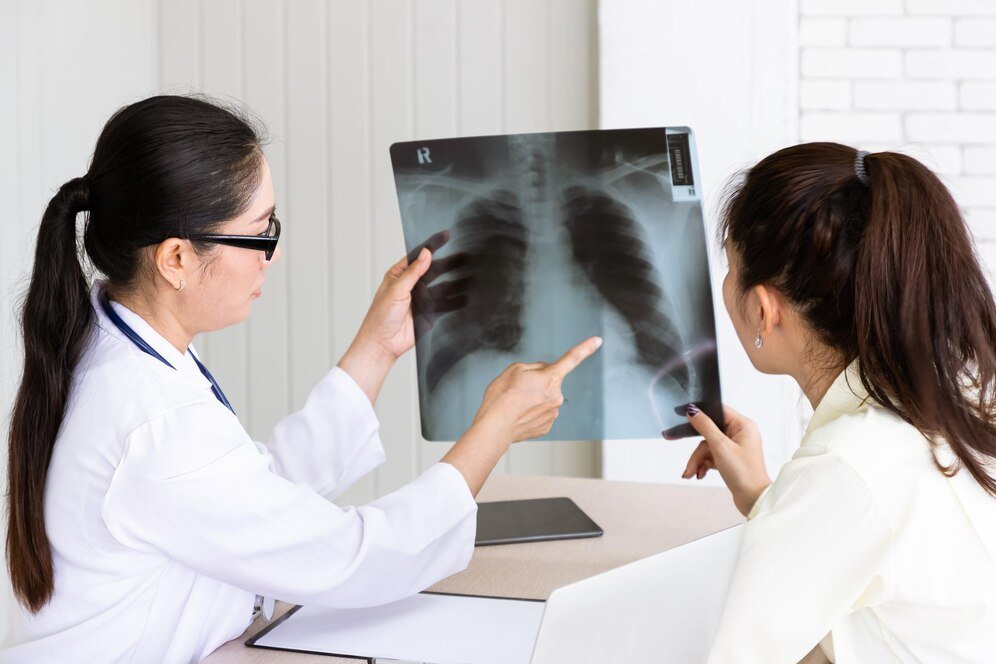
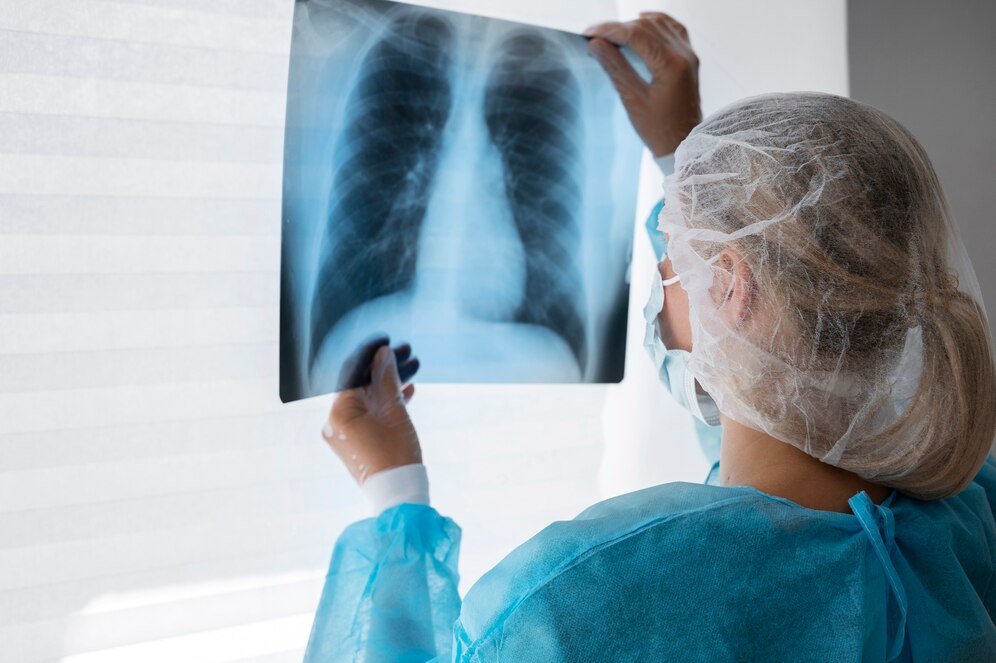
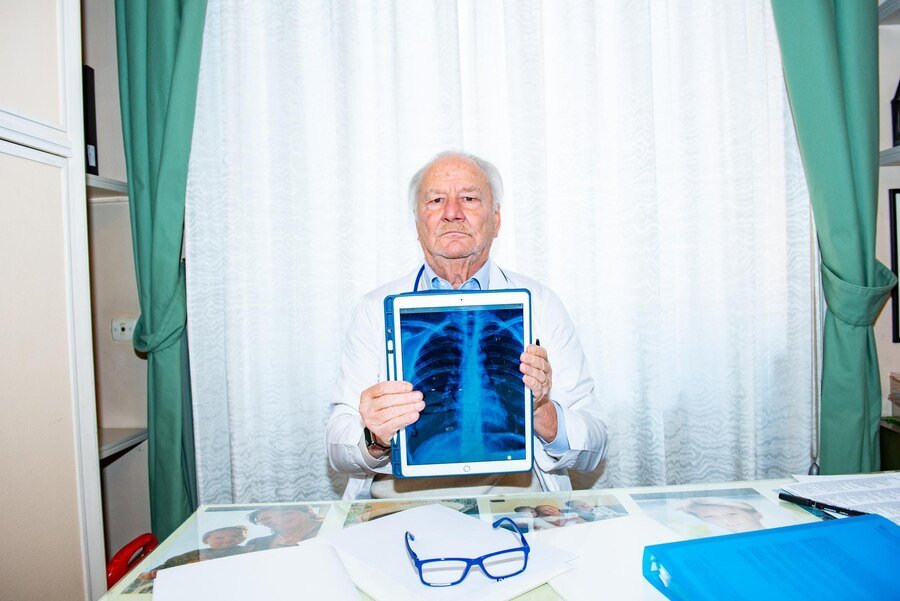
Pleurisy, also known as pleuritis, is a condition where the pleura—the thin, double-layered membrane surrounding the lungs and lining the chest cavity—becomes inflamed. This inflammation causes the two layers to rub against each other during breathing, leading to a characteristic sharp, stabbing chest pain that worsens with deep breathing, coughing, or sneezing. Common causes of pleurisy include viral or bacterial infections, pulmonary embolism, autoimmune diseases (like lupus or rheumatoid arthritis), lung cancer, and chest trauma. Diagnosis usually involves a combination of physical examination, chest X-ray, CT scan, ultrasound, and sometimes pleural fluid analysis if there is an associated effusion. Treatment depends on the underlying cause: antibiotics for infections, anti-inflammatory medications (like NSAIDs) for pain relief, and corticosteroids for autoimmune-related pleurisy. In some cases, a procedure to remove excess pleural fluid (thoracentesis) may be needed to ease symptoms and assist diagnosis. Prompt treatment is important to relieve pain and prevent complications such as pleural effusion or lung collapse.









.jpg)
.jpg)
.jpg)