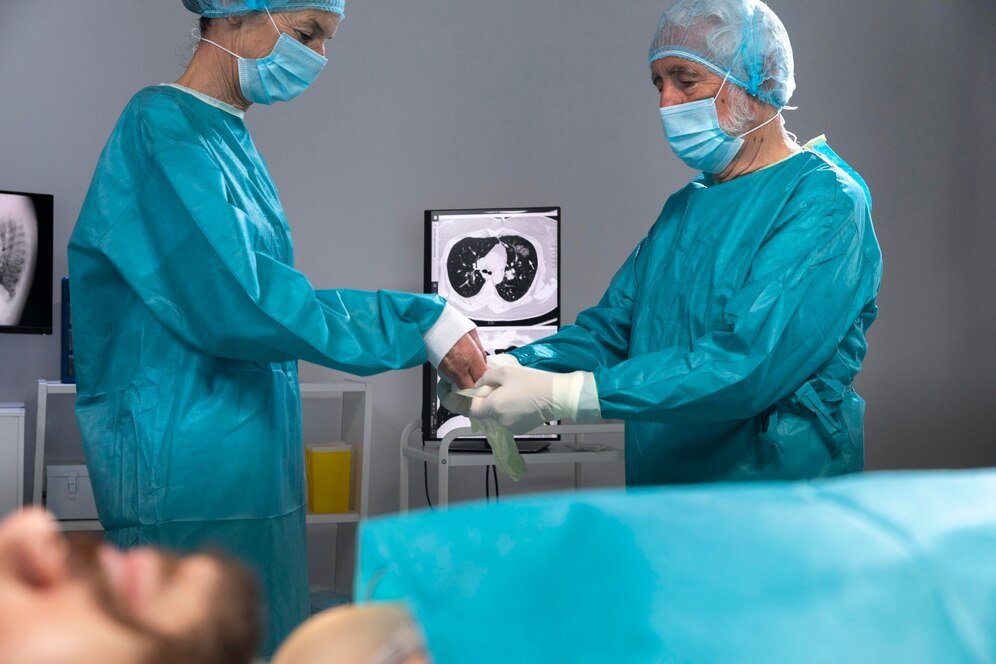
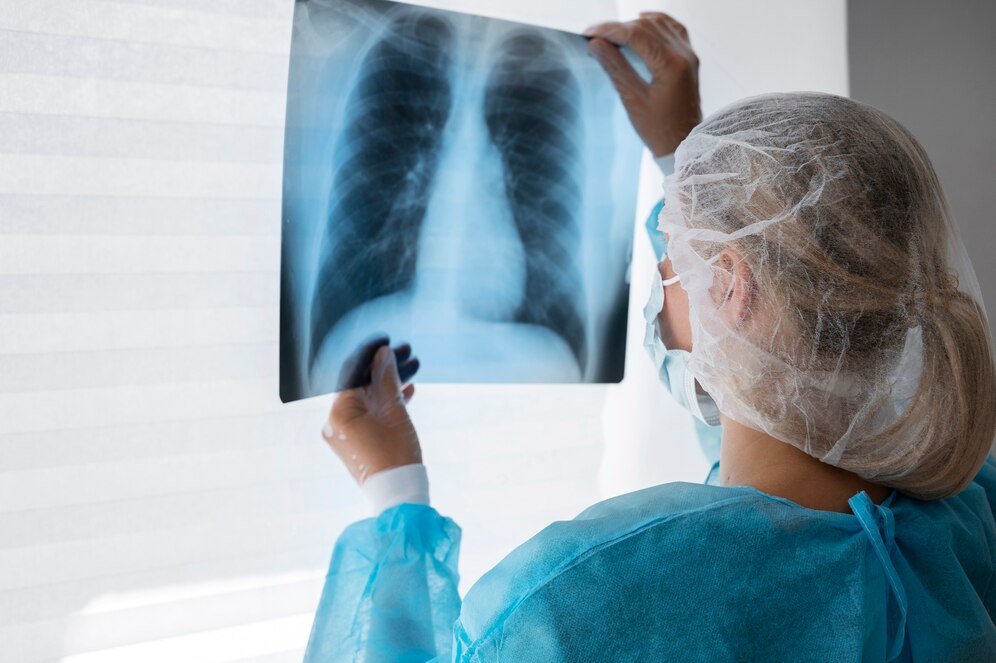
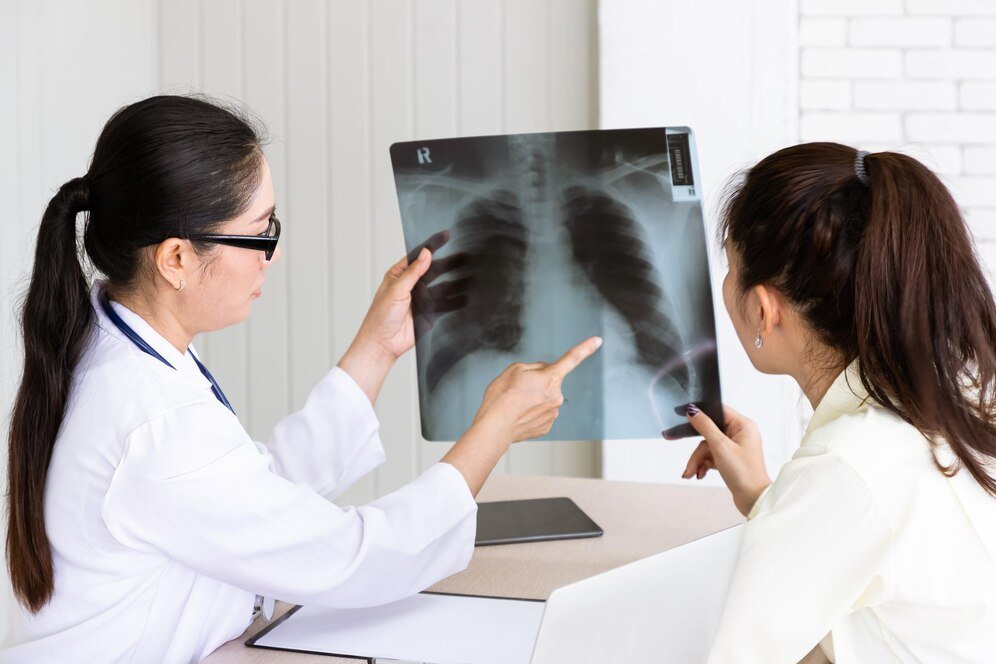
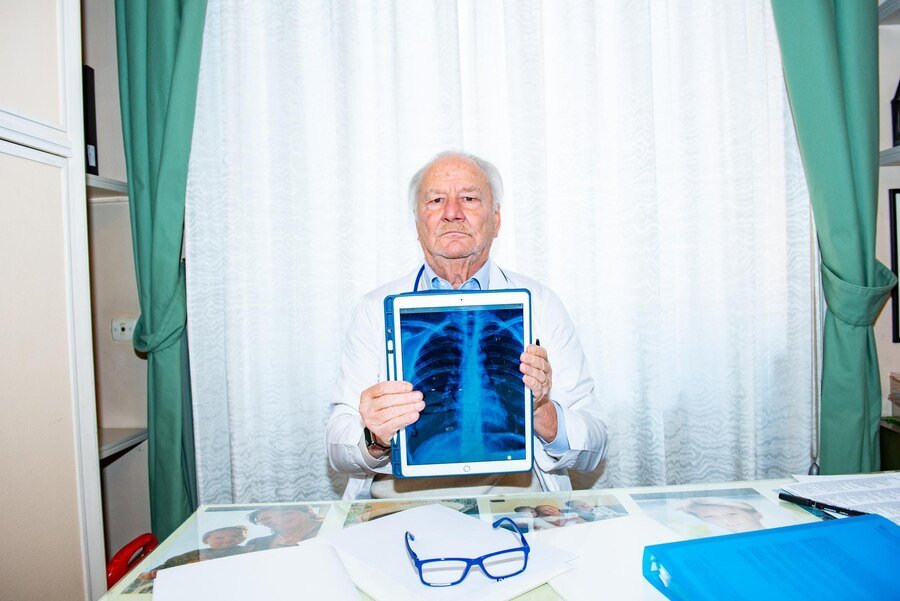
Bronchoscopy is a medical procedure used to examine the airways and lungs, allowing doctors to directly view the trachea, bronchi, and smaller air passages using a flexible tube called a bronchoscope. This procedure is often used to diagnose and manage a variety of lung conditions, including persistent cough, unexplained wheezing, infection, lung cancer, or foreign body aspiration. The bronchoscope can be passed through the nose or mouth into the airways, and it may be equipped with cameras, light sources, and tools for taking biopsies or washing out the lungs. There are two main types of bronchoscopy: flexible bronchoscopy, which is the most common and involves a thinner, more maneuverable tube, and rigid bronchoscopy, which is used less frequently and is typically reserved for more complicated cases like removing large obstructions. In addition to diagnostic purposes, bronchoscopy can be used for therapeutic procedures such as clearing mucus, removing tumors, or administering medications directly to the lungs. While generally safe, risks include bleeding, infection, and, rarely, puncture of the lung. Local anesthesia and sedation are usually administered to minimize discomfort.






.jpg)
.jpg)
.jpg)